
The UK Fasteners Industry
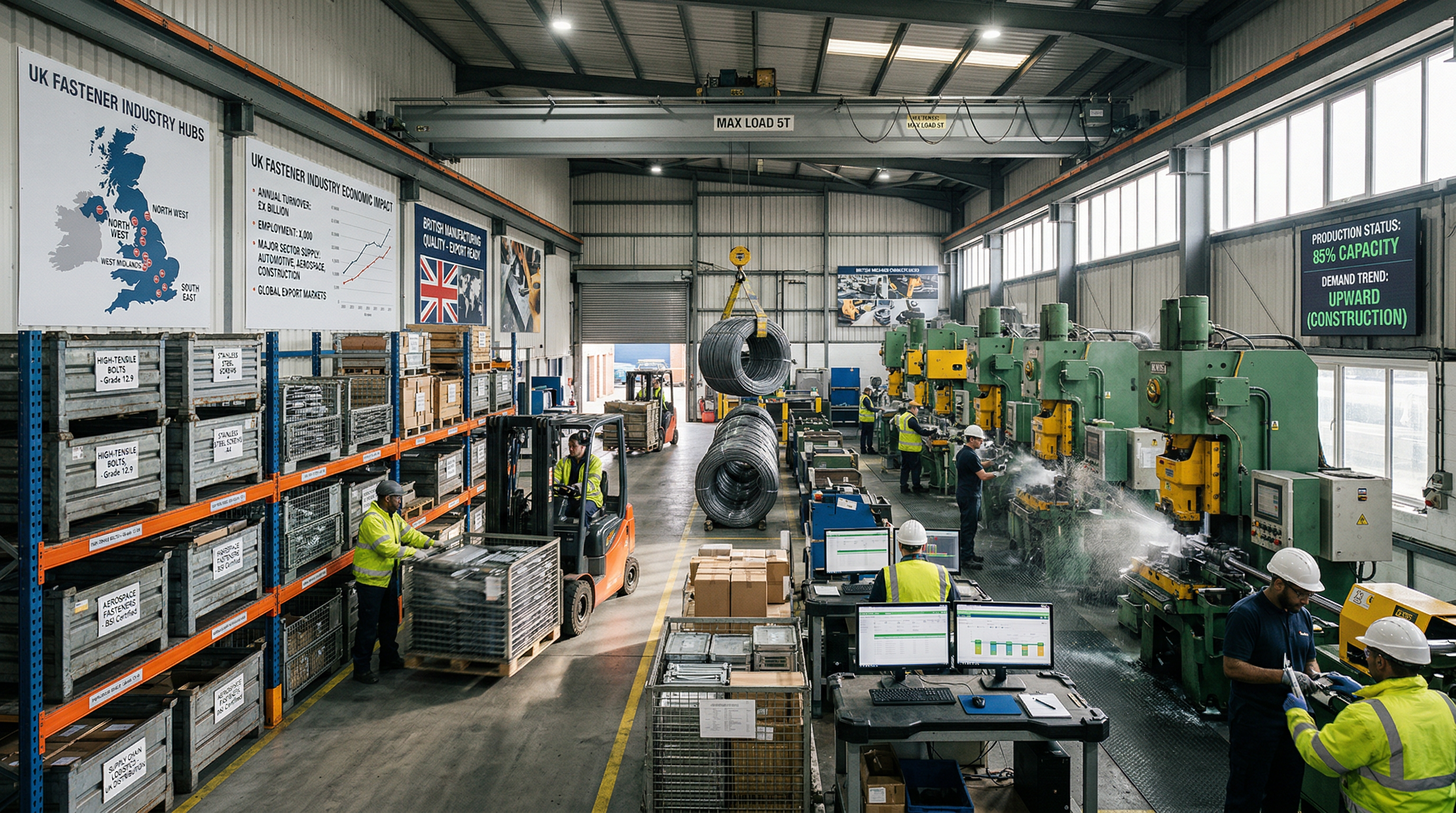
The UK fasteners industry—covering bolts, screws, nuts, and specialist fixing systems—remains a small but strategically important segment of the broader manufacturing economy. Its performance is closely tied to cyclical sectors such as construction, automotive, aerospace, and energy, making it highly sensitive to shifts in industrial demand.
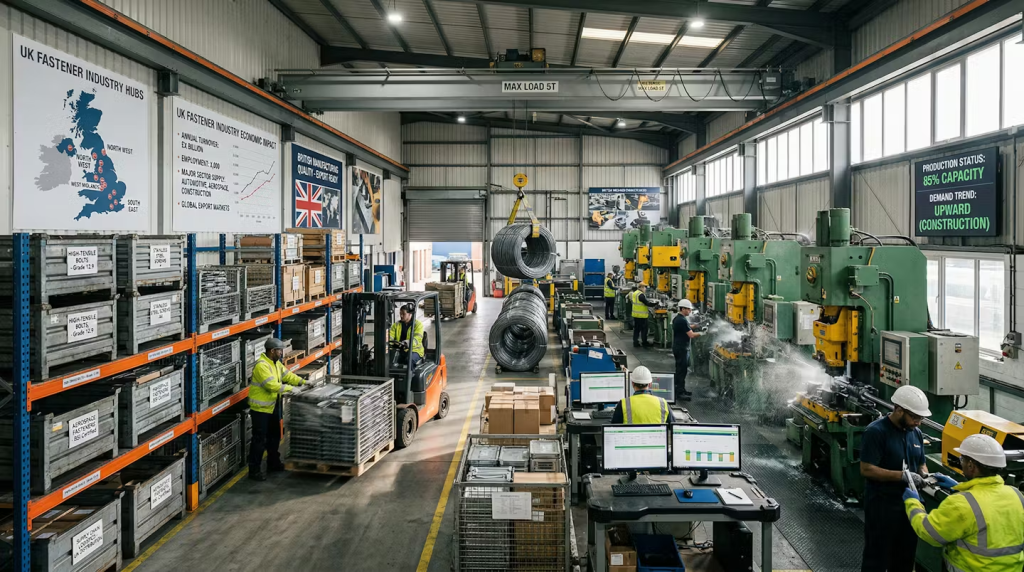
In recent years, the sector has faced persistent cost pressures driven by volatile steel prices, energy costs, and supply chain disruptions. Many UK distributors and manufacturers rely on imported fasteners or raw materials, leaving margins exposed to currency fluctuations and global trade dynamics. Brexit has added administrative friction and extended lead times, prompting some firms to reassess sourcing strategies and increase domestic inventory holdings.
At the same time, there is a gradual shift toward higher-value, specialised fasteners. Demand is growing in aerospace, defence, and renewable energy projects, where precision engineering and certification requirements create barriers to entry and support stronger margins. This transition is encouraging investment in advanced manufacturing techniques and quality assurance systems.
However, the industry remains fragmented, with a large number of SMEs competing on price in commoditised segments. Consolidation among distributors has accelerated, improving purchasing power and logistics efficiency. Labour shortages—particularly in skilled machining and engineering roles—continue to constrain growth.
Overall, the UK fasteners market reflects broader industrial trends: pressure on low-cost manufacturing, increasing reliance on global supply chains, and a gradual pivot toward specialised, higher-margin production.